Skip to content

The power of social connection as we age

Written by Jhanna Culver, Social Worker with integratedliving

Summary

Social connection protects both body and mind as we age. Research suggests isolation carries health risks comparable with daily smoking, while people with strong relationships have about 50% better odds of survival than those with weak social ties. The good news is that connection can be rebuilt with small regular steps, from one phone call to joining a group.

Why connection matters more as we get older.

Connection plays an important role in healthy ageing. Maintaining meaningful relationships can support our physical and mental health, improve wellbeing and help us live longer. Research analysing 148 studies involving more than 300,000 people found that those with stronger social relationships had a 50% greater likelihood of survival than those with weaker social ties.1

The importance of connection is also reflected in research comparing the health risks of social disconnection with other recognised risk factors. A US Surgeon General's report found that lacking social connection carries a mortality risk comparable to smoking up to 15 cigarettes a day.2

The World Health Organization (WHO) has identified social connection as a global public health priority. It's 2025 Commission on Social Connection estimated that loneliness is associated with more than 871,000 deaths worldwide each year – that's around 100 deaths every hour. Loneliness and social isolation are also associated with an increased risk of stroke, heart disease, diabetes, cognitive decline and depression.3

Loneliness and social isolation: what’s the difference?

Loneliness and social isolation are related, but they aren't the same thing.

 Loneliness is a personal feeling of distress when the social connections you have don't meet the connections you want or need. Social isolation is an objective situation where someone has too few social relationships or interactions with others4.

You can live alone and feel content, or be surrounded by family and still feel lonely. Understanding the difference can help you recognise what kind of connection or support might be helpful.

How common is loneliness as we age?

Loneliness affects approximately one in six people worldwide, according to the WHO. The organisation also estimates that social isolation affects up to one in three older adults3.

In Australia, around 15% of people aged 65 and over experienced loneliness in 2024, according to the Australian Institute of Health and Welfare (AIHW)5.

Ageing can bring changes that affect our social connections, such as losing a partner or friends, experiencing health or hearing changes, giving up driving, or having family move further away. These changes can make it harder to maintain relationships, but there are practical ways to stay connected.

4 practical ways to strengthen connection every day

Start small and build up from there. You don’t need to overhaul your week at once – one new contact or activity is a great step in the direction towards more connection.

1

Try a local group

Groups built around shared experiences make it easier to talk.

2

Reconnect close to home

Say hello to a neighbour, check in on a family member, or call an old friend you haven't spoken to in a while.

3

Look into community activities in your area

Look for senior clubs, hobby groups, library sessions or low-effort volunteering. These can be a great way to reinvigorate your interests and meet like-minded people on a regular basis. Our Wellness Centres and Activity Centres also run classes and social activities where you can meet others.

4

Start with small questions

When you head along somewhere new with new people, it's good to have a few simple conversation-starter questions up your sleeve. Most people there will be happy to make a new connection and delighted you want to know more about them.

How a social worker can help when connecting feels hard

If health, transport, grief or confidence is making it difficult to stay connected, a social worker may be able to help.

Our qualified social workers provide practical guidance, emotional support and referrals to community programs and services. They can help you explore your best options for overcoming any challenges based on your circumstances, interests and goals.

A support worker can help you:

Find community groups, activities and support programs that match your interests.

Work through practical barriers and access appropriate community resources.

Navigate grief, stress or significant life changes.

Connect with other aged care and support services.

For families and carers: how can you help?
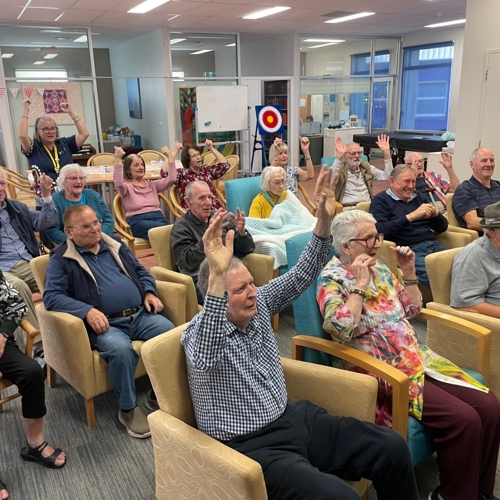
Families and carers can play an important role in helping older people maintain social connections.

Notice when changes in a loved one's usual routines, interests or social activities are impacting their ability or desire to engage socially. Offer practical and low-pressure support to help them rebuild connection.

You can help by:

  • Setting up a regular phone call or visit at the same time each week. 
  • Offering a lift or helping them explore transport options. 
  • Going along to their first group session to help them feel comfortable and meet some friendly faces there.
  • Helping them video call grandchildren or friends and family members who live further away.
  • Encouraging activities and interests they have previously found enjoyable, and finding options available locally.

Remember, starting a conversation and showing someone you're there can make a difference in itself.

How to get social support through My Aged Care
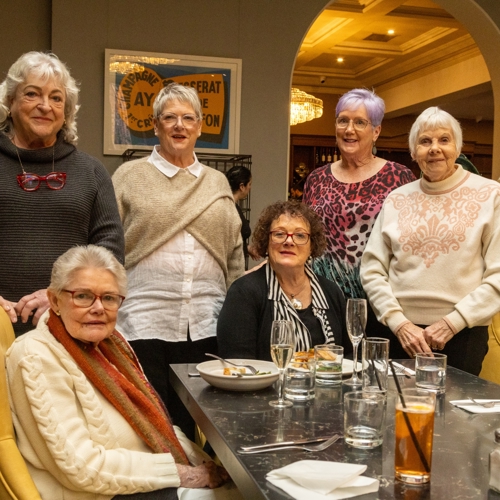
Government-funded social support can help older people stay connected with their community, maintain their relationships and participate in activities.

Depending on your eligibility and assessed needs, support may be available through the Commonwealth Home Support Programme (CHSP) or Support at Home.

Social support services can include:

  • Individual or group social support.
  • Accompanied activities and outings. 
  • Cultural and community activities. 
  • Help to participate in social interactions in person or online.
  • Digital education and support, including help with video calls. 

An aged-care assessment helps determine your eligibility and the support that may be available to you. You can contact My Aged Care to find out more about accessing services.


Staying connected doesn't have to mean making big changes. Sometimes, it's the smaller everyday interactions, shared interests and familiar faces that make the biggest difference.

Could you use more social connection in your week?

Frequently asked questions about connection

Can you feel lonely even with family around?

Yes. Loneliness is about the quality of connection, not the number of people nearby. Someone who sees family often can still feel unheard or left out, especially after losing a partner or close friend. Encouraging honest conversation and listening to understand is an ideal way to help

Do phone and video calls count as staying connected?

They do. Regular phone and video calls keep relationships going, particularly with family who live far away. They work best alongside other face-to-face contact.

If technology feels tricky, government-funded social support can include help with digital skills, such as learning to video chat on a tablet or computer.

What if transport stops me getting to groups?

Transport is one of the most common barriers to outings, especially after giving up driving.

Through My Aged Care you or your loved one may be eligible for transport help or for a support worker to go with you to activities.

Many groups are also on bus routes, and our social workers can help you explore these options.

How do I encourage a parent who doesn’t want to join a group?

Start with what they already enjoy rather than a “social group”. A shared hobby, a gentle exercise class or a volunteering role can feel less daunting. Offer to go along the first time, and give it a few weeks. Small, regular contact matters more than any one big outing.

Is loneliness the same as depression?

No, but they are linked. Loneliness is a feeling of disconnection, while depression is a health condition with symptoms such as low mood and loss of interest lasting two weeks or more. Long-term loneliness raises the risk of depression. If low mood persists, talk to your doctor.

Where can I get support if I’m feeling very low?

If you are struggling, please reach out. Talk to your General Practitioner, call Beyond Blue on 1300 22 4636, or call Lifeline on 13 11 14 any time, day or night. If you or someone else is in immediate danger, call 000.

You don’t have to wait until things feel serious.

References

1

Holt-Lunstad J, Smith TB, Layton JB. Social relationships and mortality risk: a meta-analytic review. PLoS Med. 2010;7(7):e1000316. doi:10.1371/journal.pmed.1000316. Available from: https://doi.org/10.1371/journal.pmed.1000316

2

Office of the US Surgeon General. Our epidemic of loneliness and isolation: the US Surgeon General's advisory on the healing effects of social connection and community [Internet]. Washington (DC): US Department of Health and Human Services; 2023 [cited 2026 Nov 16]. Available from: https://www.ncbi.nlm.nih.gov/books/NBK595227/

3

World Health Organization. From loneliness to social connection: charting a path to healthier societies: report of the WHO Commission on Social Connection [Internet]. Geneva: WHO; 2025 [cited 2026 Nov 16]. Available from: https://www.who.int/publications/i/item/978240112360

4

World Health Organization. Social connection [Internet]. Geneva: WHO; 2025 [cited 2026 Nov 16]. Available from: https://www.who.int/news-room/questions-and-answers/item/social-connection

5

Australian Institute of Health and Welfare. Social isolation and loneliness – Mental health [Internet]. Canberra: AIHW [cited 2026 Nov 16]. Available from: https://www.aihw.gov.au/mental-health/topic-areas/health-wellbeing/social-isolation-and-loneliness